

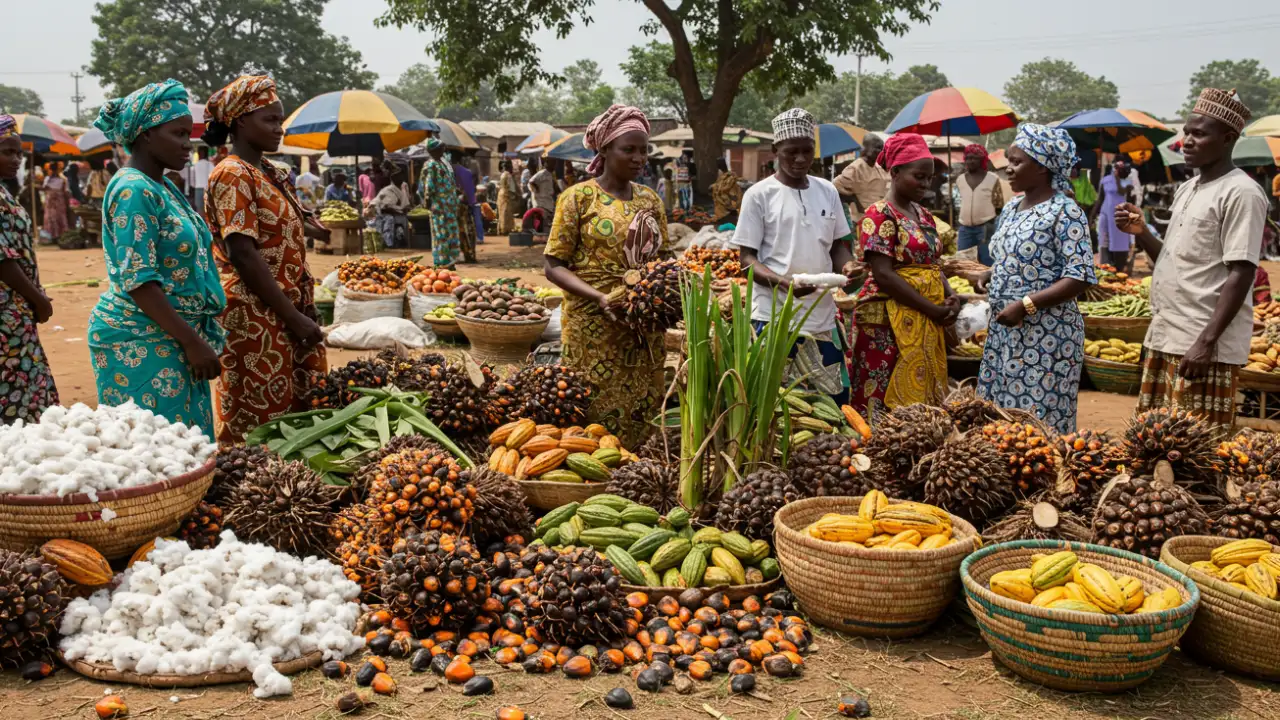
In Nigeria, agriculture remains the backbone of the economy, employing millions and contributing significantly to the nation’s GDP. Among the various agricultural practices, cash crop farming stands out as a critical driver of economic growth, providing substantial income for farmers, agribusinesses, and the country as a whole. Cash crops, cultivated primarily for commercial purposes rather than subsistence, have long been a cornerstone of Nigeria’s agricultural landscape. Crops such as palm oil, cocoa, rubber, cashew, and sesame are not only staples in local markets but also highly sought-after commodities in international trade. At Exported Agro Solution Ltd, we are committed to empowering farmers to harness the full potential of cash crop farming, transforming traditional practices into modern, profitable, and sustainable ventures. This article explores the significance of cash crops in Nigeria, their economic impact, and how our organization supports farmers in achieving success in this dynamic sector.
The Importance of Cash Crops in Nigeria
Cash crops are agricultural products grown primarily for sale in local and international markets, as opposed to crops grown for personal consumption. In Nigeria, cash crops have historically played a pivotal role in the economy, dating back to the colonial era when crops like cocoa, groundnuts, and palm oil were major export commodities. Today, these crops continue to be a significant source of income for farmers and agribusinesses, contributing to foreign exchange earnings and rural development.
Palm oil, one of Nigeria’s most versatile and profitable cash crops, is a prime example of the sector’s potential. Used in food production, cosmetics, biofuels, and industrial applications, palm oil enjoys consistent global demand. Nigeria is one of the world’s largest producers of palm oil, with vast plantations in the southern regions of the country. Similarly, cocoa, often referred to as the “brown gold” of Nigeria, is a major export crop, with the country ranking among the top producers globally. Rubber, cashew, sesame, and other crops like ginger and soybeans also contribute significantly to Nigeria’s agricultural exports, providing farmers with diverse opportunities to generate income.
The economic impact of cash crops extends beyond individual farmers. These crops drive job creation, support rural communities, and foster the growth of related industries such as processing, packaging, and logistics. By focusing on cash crops, Nigeria can reduce its dependence on oil revenue, diversify its economy, and promote sustainable development. However, realizing the full potential of cash crop farming requires addressing challenges such as limited access to quality inputs, inadequate training, and restricted market access. This is where Exported Agro Solution Ltd steps in, bridging the gap between farmers and the opportunities available in the global agricultural market.
Exported Agro Solution Ltd: Empowering Farmers for Success
At Exported Agro Solution Ltd, our mission is to transform subsistence farming into thriving commercial agriculture that benefits farmers, communities, and the nation. We believe that every farmer, whether a novice or an experienced professional, has the potential to succeed in cash crop farming with the right support and resources. To achieve this, we provide a comprehensive suite of services designed to empower farmers and maximize their productivity and profitability.
Training and Capacity Building
One of the cornerstones of our approach is providing farmers with the knowledge and skills needed to excel in cash crop farming. We offer tailored training programs that cover every aspect of agricultural production, from soil preparation and crop selection to pest management and post-harvest handling. Our training sessions are designed to be practical and accessible, ensuring that farmers of all experience levels can benefit. For instance, we educate farmers on the best practices for cultivating high-yield varieties of palm oil, cocoa, and rubber, emphasizing sustainable farming techniques that preserve soil fertility and minimize environmental impact.
In addition to technical skills, we provide training on market trends and consumer preferences, helping farmers align their production with current demand. For example, we guide farmers on the growing demand for organic and sustainably sourced products in international markets, enabling them to tap into premium price segments. By equipping farmers with this knowledge, we empower them to make informed decisions that enhance their profitability.
Access to Quality Seedlings and Inputs
High-quality inputs are essential for successful cash crop farming. At Exported Agro Solution Ltd, we supply farmers with certified, high-yield seedlings that are well-suited to Nigeria’s diverse agro-ecological zones. Whether it’s disease-resistant cocoa varieties, fast-growing palm oil hybrids, or resilient rubber trees, we ensure that farmers have access to the best planting materials available. We also provide access to modern agro-tech inputs, such as fertilizers, pest control solutions, and irrigation systems, to boost productivity and crop resilience.
Our team works closely with agricultural research institutions and seed companies to source the most reliable and productive inputs. By providing these resources at affordable rates, we reduce the financial burden on farmers and enable them to invest in their farms with confidence.
Connecting Farmers to International Markets
One of the biggest challenges faced by Nigerian farmers is accessing lucrative international markets. At Exported Agro Solution Ltd, we bridge this gap by connecting farmers directly with buyers in Europe, Asia, North America, and beyond. Our established network of international partners ensures that farmers receive fair prices for their crops, maximizing their income. We handle the complexities of export logistics, including quality control, certification, and shipping, so farmers can focus on what they do best—farming.
For example, we assist palm oil farmers in meeting the stringent quality standards required by global buyers, such as those in the food and cosmetics industries. Similarly, we help cocoa farmers obtain certifications like Fair Trade or Rainforest Alliance, which open doors to premium markets. By facilitating these connections, we ensure that Nigerian cash crops compete effectively on the global stage.
Promoting Sustainable and Profitable Farming
Sustainability is at the heart of our operations. We recognize that long-term success in cash crop farming depends on practices that preserve the environment and support the well-being of farming communities. To this end, we promote agroforestry, crop rotation, and organic farming techniques that enhance soil health and biodiversity. We also encourage the adoption of climate-smart agriculture practices, such as water-efficient irrigation and drought-resistant crop varieties, to help farmers adapt to changing environmental conditions.
Our support extends beyond the farm gate. We provide guidance on value addition, such as processing palm oil into refined products or packaging cocoa for retail markets. By adding value to their crops, farmers can increase their profit margins and build resilience against market fluctuations.
Choosing the Right Cash Crops for Your Region
Nigeria’s diverse climate and geography offer opportunities for a wide range of cash crops. However, selecting the right crop for a specific region is critical to success. At Exported Agro Solution Ltd, we provide personalized consultations to help farmers choose crops that align with their local conditions, market demand, and financial goals. For instance:
- Palm Oil: Thrives in the humid, tropical regions of southern Nigeria, particularly in states like Edo, Delta, and Cross River. Its high demand and versatility make it a top choice for farmers.
- Cocoa: Best suited to the southwestern states, such as Ondo, Oyo, and Osun, where rainfall and soil conditions are ideal. Cocoa remains a high-value export crop with strong global demand.
- Rubber: Grown primarily in the southern and central regions, rubber is a low-maintenance crop with steady demand in industrial markets.
- Cashew and Sesame: These crops perform well in the northern and central regions, offering farmers in drier climates viable options for commercial farming.
Our experts analyze soil types, rainfall patterns, and market trends to provide data-driven recommendations, ensuring that farmers maximize their yields and profits.
Why Partner with Exported Agro Solution Ltd?
Partnering with Exported Agro Solution Ltd offers farmers a pathway to sustainable and profitable cash crop farming. Our holistic approach—combining training, quality inputs, market access, and sustainability—sets us apart as a trusted partner for farmers across Nigeria. By working with us, farmers gain access to:
- Expert Guidance: Our team of agronomists and market specialists provides ongoing support to ensure success at every stage of the farming process.
- Global Reach: Our international network connects farmers to high-value markets, ensuring competitive prices for their crops.
- Sustainable Practices: We promote environmentally friendly farming methods that protect the land and ensure long-term productivity.
- Community Impact: By empowering farmers, we contribute to rural development, job creation, and economic growth in Nigeria.
The Future of Cash Crop Farming in Nigeria
The future of cash crop farming in Nigeria is bright, with growing global demand for agricultural products and increasing opportunities for value addition. At Exported Agro Solution Ltd, we are committed to leading this transformation by equipping farmers with the tools, knowledge, and market access they need to thrive. Whether you’re a smallholder farmer looking to scale up or an experienced agribusiness seeking to expand into international markets, we are here to support your journey.
Join us today and take the first step toward a profitable and sustainable cash crop venture. Together, we can unlock the full potential of Nigeria’s agricultural wealth, creating a brighter future for farmers, communities, and the nation.Show in sidebar